Know what an employee really costs, and pay them right.
A free calculator for salary, employer National Insurance and pension, a free statutory pay check, and plain-English guides for taking someone on.
Free, no account or email needed. Independent, not HMRC.
Help with paying and taking on staff
The calculators, the statutory pay check and the guides are free. If you want more, there are optional extras.
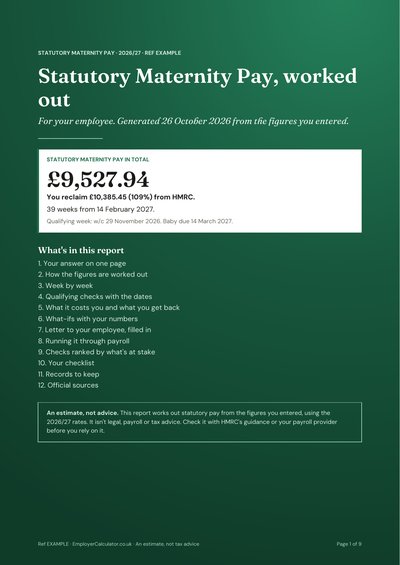
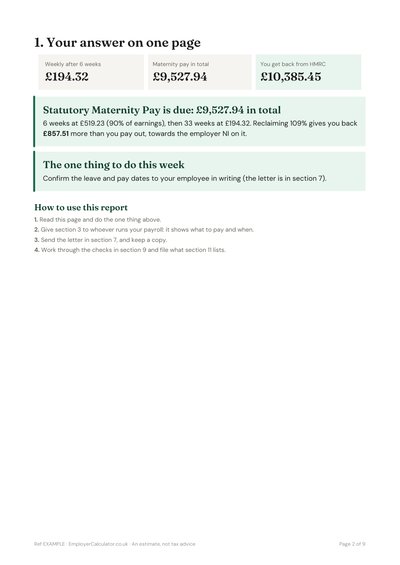
Statutory pay worked out
Sick, maternity or paternity pay, or holiday for irregular hours: what to pay each week and what you can reclaim, free.
- The 2026/27 rates and qualifying checks
- What you can reclaim from HMRC
- Optional report with a letter to your employee
Free check · optional paid report · full refund on request

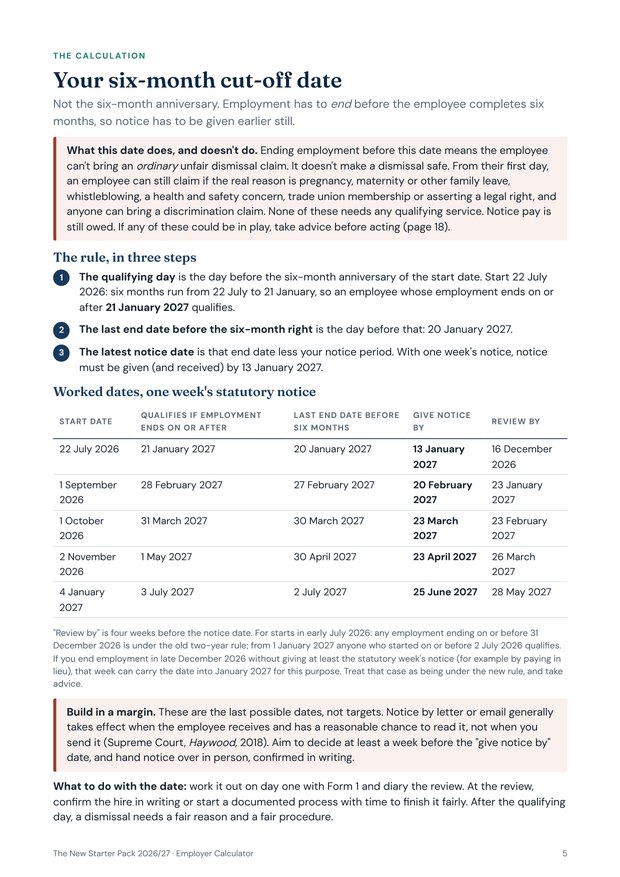
The New Starter Pack
What the law requires before and on day one, the written statement, and eight print-and-fill forms you reuse for every hire.
- Legal requirements vs good practice
- Each hire’s six-month cut-off date
- 8 print-and-fill forms
One-off payment · instant download · 14-day refund
Budget-proof: free update if the 28 Oct Budget changes it.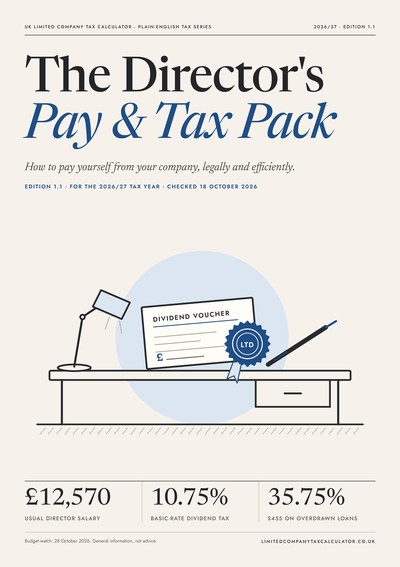

The 2026/27 Tax Pack Library
All seven of our 2026/27 tax packs: new starters, director’s pay, sole trader, pensions, Capital Gains Tax, home buying and PAYE tax codes.
- Seven plain-English packs for 2026/27
- Download one at a time or all in one ZIP
- One payment, no subscription
One-off payment · 7 packs · full refund on request
HMRC’s and Acas’s guidance is free too. These extras are optional. Not sure which fits? Compare them.
Employer Cost Calculator UK 2026/27
Calculate the true cost of employing someone in the UK: salary, employer National Insurance, workplace pension contributions and optional overheads. Enter any salary below for your exact figure.
Employer NI & Total Cost Calculator
Adjust the salary — results update instantly.
Buying a home? See what it last sold for, free
Buying a home? See what it last sold for, free
Free check · 2026/27
Someone off sick or going on leave? Work out their statutory pay
Work out what to pay, week by week, and what you can reclaim from HMRC.
Three quick steps to estimate employer cost
Set salary and pension
Enter gross salary, then choose employer pension rate for a realistic statutory baseline.
Add overheads and allowance
Include software, equipment and workspace costs, then apply Employment Allowance if eligible.
Use monthly and annual totals
Review total employer cost, NI split and cost-above-salary before approving hires.
All employer calculators
Tools for different search intents: full employer cost calculator, employer NI calculator, payroll planner and supporting HR calculators. All updated for 2026/27 rates.
Employer NI & Total Cost
Salary + NI at 15% + pension + overheads. Full employer cost with band breakdown for 2026/27.
Payroll Planner
Model total payroll cost for multiple employees with Employment Allowance, pension and overheads.
Employer NI by Salary
Ready-made NI calculations at 48 salary levels. Shareable pages updated for the April 2025 rate change.
Holiday Entitlement
Statutory and contractual holiday for full-time, part-time and mid-year starters.
Redundancy Pay
Statutory redundancy by age, service years and weekly pay. Includes PILON and tax treatment.
Statutory Maternity Pay
6-week higher rate + 33-week lower rate. Employer cost and SMP recovery.
Notice Period
Statutory vs contractual notice, exact end dates, and payment in lieu of notice.
Settlement Agreement
Estimate settlement value including notice, redundancy, compensatory amounts and tax treatment.
Pro Rata Salary
Convert full-time salary to part-time equivalent by days or hours per week.
Statutory Sick Pay
SSP eligibility, waiting days, weekly amounts and duration for 2026/27.
Employer Pension Cost
Auto-enrolment costs on qualifying earnings. Employer minimum, total minimum and opt-out rates.
Bradford Factor
Absence scoring for HR teams. Input episodes and days to calculate Bradford Factor score.
Unfair Dismissal Compensation
Basic award + compensatory award estimates. Updated for Employment Rights Act 2025 changes.
Employer payroll and staff cost tools
Statutory pay calculators, absence scoring, minimum wage rates and levy calculators — updated for 2026/27.
SSP Calculator
Statutory Sick Pay for 2026/27: £123.25/week. Check eligibility, waiting days, duration and total employer cost.
SMP Calculator
Statutory Maternity Pay: 6 weeks at 90% AWE then weekly flat rate. Includes HMRC recovery for small employers.
Holiday Entitlement Calculator
Statutory and contractual holiday. Full-time: 28 days. Part-time: pro-rated by days or hours per week.
Minimum Wage 2026/27
NLW £12.71/hr (21+), £10.85/hr (18–20), £8.00/hr apprentice. Employer NI and total cost at each rate.
£12.71 an Hour Is How Much a Year?
£24,784.50 full-time (37.5 hrs). Annual, monthly and weekly pay at 30/35/37.5/40 hours, take-home and employer cost.
Bradford Factor Calculator
Formula S² × D. Score absence episodes and days to assess attendance patterns for HR management.
Apprenticeship Levy Calculator
0.5% of annual pay bill above £3 million. Estimate your levy liability and allowance offset.
Employment Allowance 2026/27
Up to £10,500 off your employer NI bill. Check eligibility, how to claim and worked examples.
Employer NI Rates 2026/27
15% on earnings above £5,000. Formula, examples at every salary level and monthly cost breakdown.
Employer cost by salary
Pre-calculated employer cost at every salary level — NI, pension and total cost. Updated for 2026/27.
Employer NI on specific salaries
How to use this as an NI rise calculator
If you are budgeting after the April 2025 changes, compare a salary in three steps: check employer NI at 15% above £5,000, check minimum pension at 3% of qualifying earnings, then compare against your old 2024/25 baseline. This gives a realistic year-on-year increase you can use in hiring approvals and cashflow planning.
Common employer cost scenarios
Quick answers for specific hiring situations — each uses 2026/27 rates and links to the full calculator.
Employer guides
Practical guides for UK employers and HR teams. Written for decision-making, not theory.
Employer NI increase April 2025 — what changed and what it costs
15% rate, £5,000 threshold, Employment Allowance increase. Impact on your payroll.
→The true cost of hiring an employee in the UK (2026/27)
Beyond salary: NI, pension, recruitment, onboarding, equipment and hidden costs.
→Employment Allowance 2026/27 — eligibility, claiming and examples
£10,500 maximum. Who qualifies, how to claim, and common mistakes.
→Auto-enrolment pension costs for employers explained
Minimum contributions, qualifying earnings, opt-out rates and cost modelling.
→Redundancy process and costs — employer guide
Statutory pay, consultation requirements, notice periods and settlement alternatives.
→Employment Rights Act 2025 — what employers need to know
Day-one rights, unfair dismissal changes, zero-hours reforms and implementation timeline.
→Employer on-costs explained — NI, pension, holiday and overheads
All the costs above salary. What employers actually pay beyond the headline number.
→Cost of hiring in London (2026/27)
London salary benchmarks, employer NI and total hiring costs with worked examples.
→Cost of hiring in Manchester (2026/27)
Manchester salary benchmarks and employer NI at common pay levels.
→Cost of hiring in Edinburgh (2026/27)
Edinburgh salary benchmarks and employer NI. Employer NI is UK-wide — Scottish income tax does not affect employer costs.
→Cost of hiring in Cardiff (2026/27)
Cardiff salary benchmarks and total hiring costs at common Welsh salary levels.
→Payroll software for UK small businesses (2026/27)
Compare Xero, QuickBooks, Sage, FreeAgent and Employment Hero — once your employer cost model is done, this is the next step.
→Cost of hiring in Sheffield (2026/27)
Sheffield salary benchmarks in manufacturing, engineering and digital, with employer NI and total above-salary cost.
→Cost of hiring in Nottingham (2026/27)
Nottingham employer costs across healthcare, retail and professional services. Worked examples at common salary levels.
→Cost of hiring your first employee in the UK (2026/27)
True cost breakdown for first-time employers: NI, pension, Employment Allowance eligibility and practical setup checklist.
→Cost of employing part-time staff UK (2026/27)
Employer NI and pension rules for part-time workers. The £5,000 NI threshold is not pro-rated — see what that means in practice.
What the calculator includes — and what it doesn't
✓ Included in the calculation
- Gross salary — the headline annual pay
- Employer National Insurance — 15% above £5,000
- Employer pension — auto-enrolment 3% of qualifying earnings
- Optional overheads — your figure for equipment or software
- Total cost to employer — annual and monthly, plus cost above salary
Not included — add separately
- Recruitment — advertising and agency fees
- Equipment, software & training — laptop, licences, onboarding
- Bonuses & benefits — commission, private healthcare
- Management time & insurance — supervision, employers' liability
- Apprenticeship Levy — only if your pay bill is above £3m
Stop doing this by hand, Sage Payroll works out employer NI, pension auto-enrolment, statutory sick and maternity pay and files RTI to HMRC automatically for UK employers. Try Sage Payroll →
Affiliate link. We may earn a commission if you sign up, at no extra cost to you.
Frequently asked questions
How much does it cost to employ someone in the UK?
What is the employer NI rate for 2026/27?
What is Employment Allowance and can I claim it?
How much does it really cost to employ someone on £35,000?
How is employer NI calculated?
What changed in April 2025 for employer costs?
How much does it cost to employ someone part-time?
What does it cost to hire your first employee in the UK?
What does a minimum wage employee cost an employer?
Is employer National Insurance included in an employee's gross salary?
Do employers pay pension contributions on top of salary?
What is the difference between gross salary and total employer cost?
Why is the true cost of an employee higher than their salary?
UK employer cost: key facts for 2026/27
Quick reference for UK employer NI, pension and total hiring cost calculations.
15% on earnings above the £5,000 secondary threshold (£96/week). No upper cap. Rate was 13.8% above £9,100 in 2024/25. Reduced rate of 0% up to £50,270 for under-21s and apprentices under 25.
Minimum employer contribution: 3% on qualifying earnings (£6,240–£50,270 band). Total minimum: 8% (employer 3% + employee 5%). Triggers for eligible employees aged 22–state pension age earning over £10,000/year.
Eligible employers can offset up to £10,500 of employer NI per tax year (increased from £5,000 in 2024/25). The previous NI-bill eligibility cap has been removed. Single-director companies without other employees remain excluded.
£25k: ~£28,563/yr · £30k: ~£34,463/yr · £35k: ~£40,363/yr · £50k: ~£58,063/yr · £75k: ~£86,821/yr. Includes employer NI + 3% pension.
Tools worth considering
UK payroll and HR tools. Editorial summary only, not endorsements.
Cloud payroll bundled with Xero accounting. Handles RTI submissions, auto-enrolment and payslip generation. Commonly used by UK small businesses already on Xero for bookkeeping.
See Xero Payroll →Payroll add-on for QuickBooks. Used by UK small employers for PAYE, NI, pension and HMRC RTI. Integrates with QuickBooks accounting.
See QuickBooks Payroll →UK payroll software that can be used on its own, without Sage's accounting software. Check current plans and prices on Sage's site.
See Sage Payroll →Affiliate link. We may earn a commission if you sign up, at no extra cost to you.
HR and payroll platform used by growing UK teams. Combines contracts, onboarding, leave management and payroll in one system. HMRC RTI integrated.
See Employment Hero →Written and reviewed by James Whitfield and the editorial team.
Every figure is checked against current HMRC and GOV.UK guidance and reviewed for the 2026/27 tax year. We explain the numbers in plain English with worked examples. Editorial standards · About us